
Industrial Onion Peeling Line
Turnkey Onion Peeling Solutions
Boost your onion processing efficiency with our high-performance peeling machines. Designed for minimal waste, high hygiene, and easy operation, our systems are ideal for fresh-cut vegetable processors, food factories, and commercial kitchens. Available in capacities from 700 to 2000 kg/h, our onion peeling machines can be configured into a fully turnkey line built around your production volume. Request a quote to get pricing tailored to your facility.
Onion Peeler OP-120
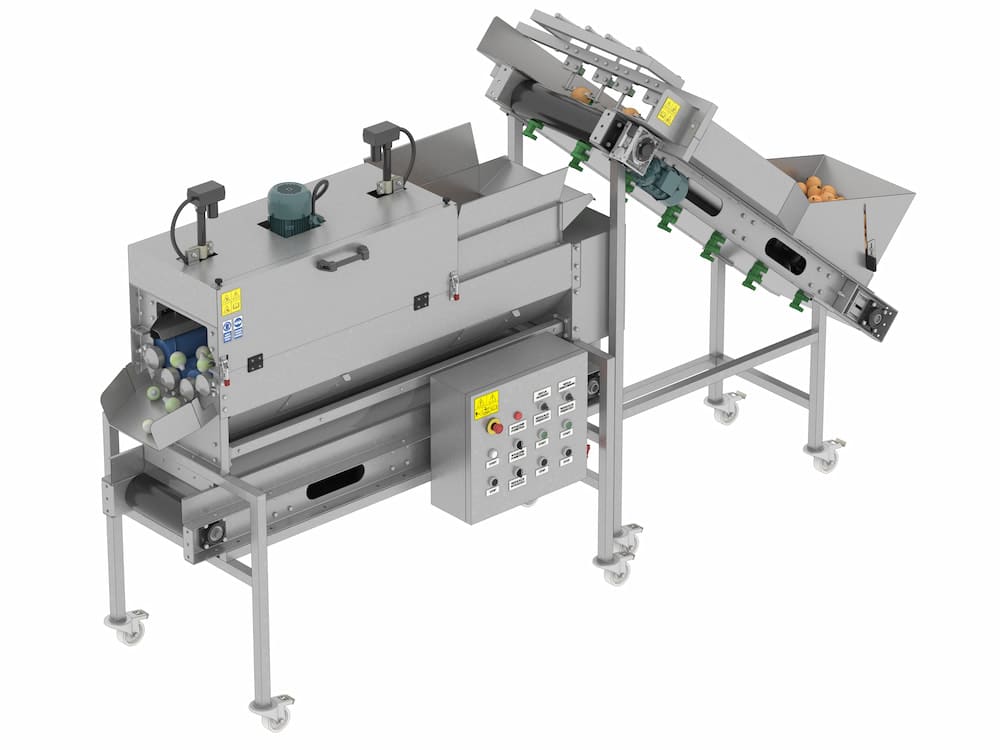
Technical Specs
| Feature | Details |
|---|---|
| Capacity | 700 – 2000 kg/h |
| Dimensions (LxWxH) | 3850 × 1100 x 1880 mm |
| Total Weight | 550 kg |
| Rollers | 4pcs, Diam. 90 | 120 mm × L1600 mm |
| Power Supply | 3~ 400 V + N + PE |
| Pneumatic Supply | 4 – 7 bar (max) |
| Structure | Mobile, wheeled; powder-coated frame |
| Working Speed | Adjustable |
| Service Personnel | 1 operator |
| Noise Level | Above 85 dB(A) |
| Operating Temperature | -25°C to +35°C |
Why Choose Our Onion Peeling Machine?
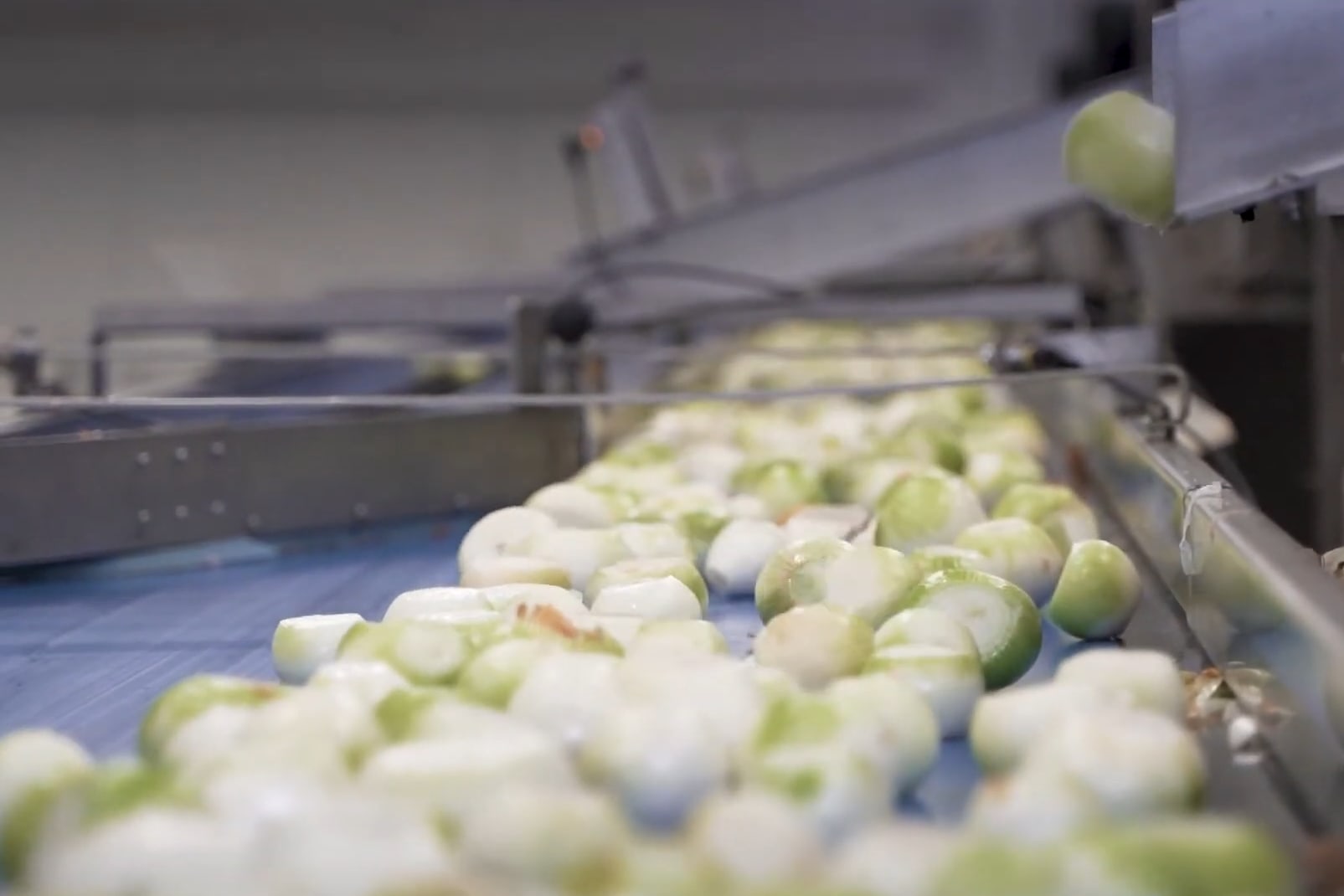
- Reduced Waste: Our onion peeler produces 15–20% less waste compared to conventional magnetic peelers on the market.
- Cost-Effectiveness: It offers a more affordable and sustainable long-term solution.
- Improved Quality: By minimizing onion damage, the machine ensures a cleaner, higher-quality final product.
- Patented Technology: Unlike magnetic peelers that rely on a single-point hit (which risks removing too many layers if the strike is inaccurate), our design uses multi-directional air jets for precise and gentle peeling.
- Higher Efficiency: The system achieves double the performance while consuming about 40% less air.
Flexible
Reliable
Cost-Effective
Fast
EU Compliant
Turnkey Solutions
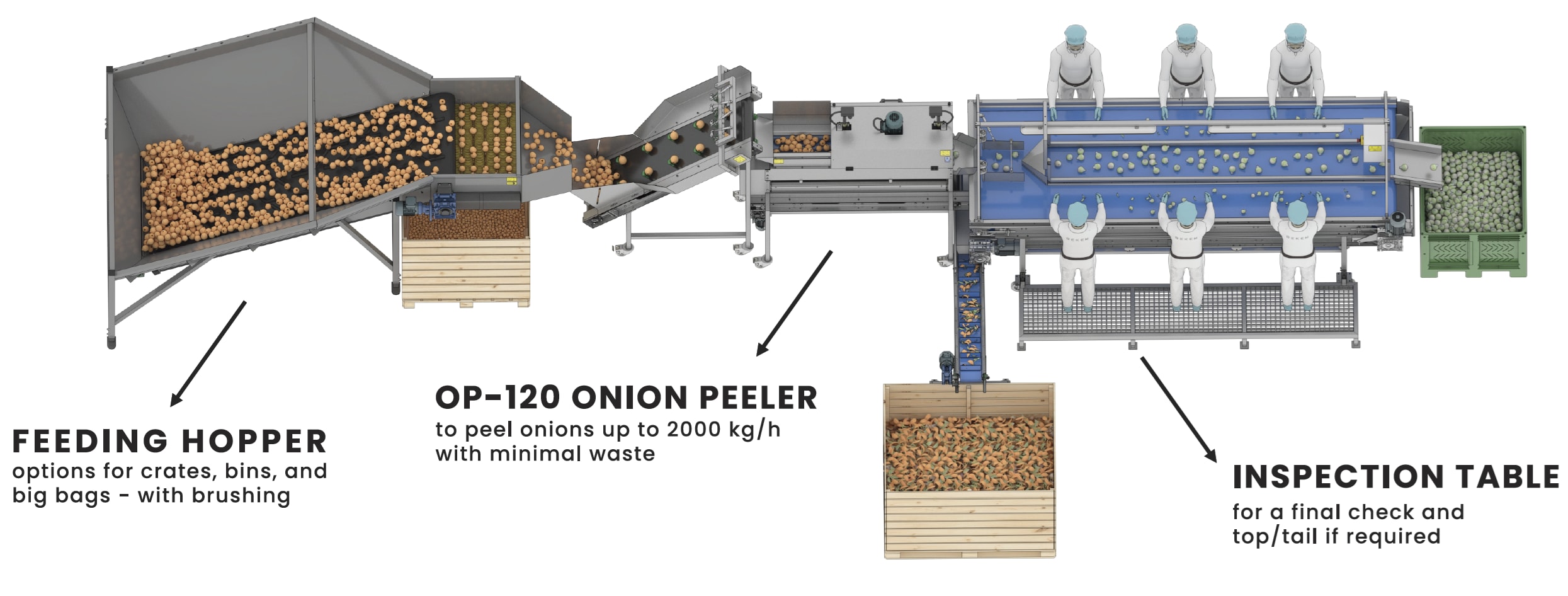
How Your Line Would Look Like:
Looking for a Customized Onion Peeling Line?
Request Quote
Onion Peeling Steps
Web Grading
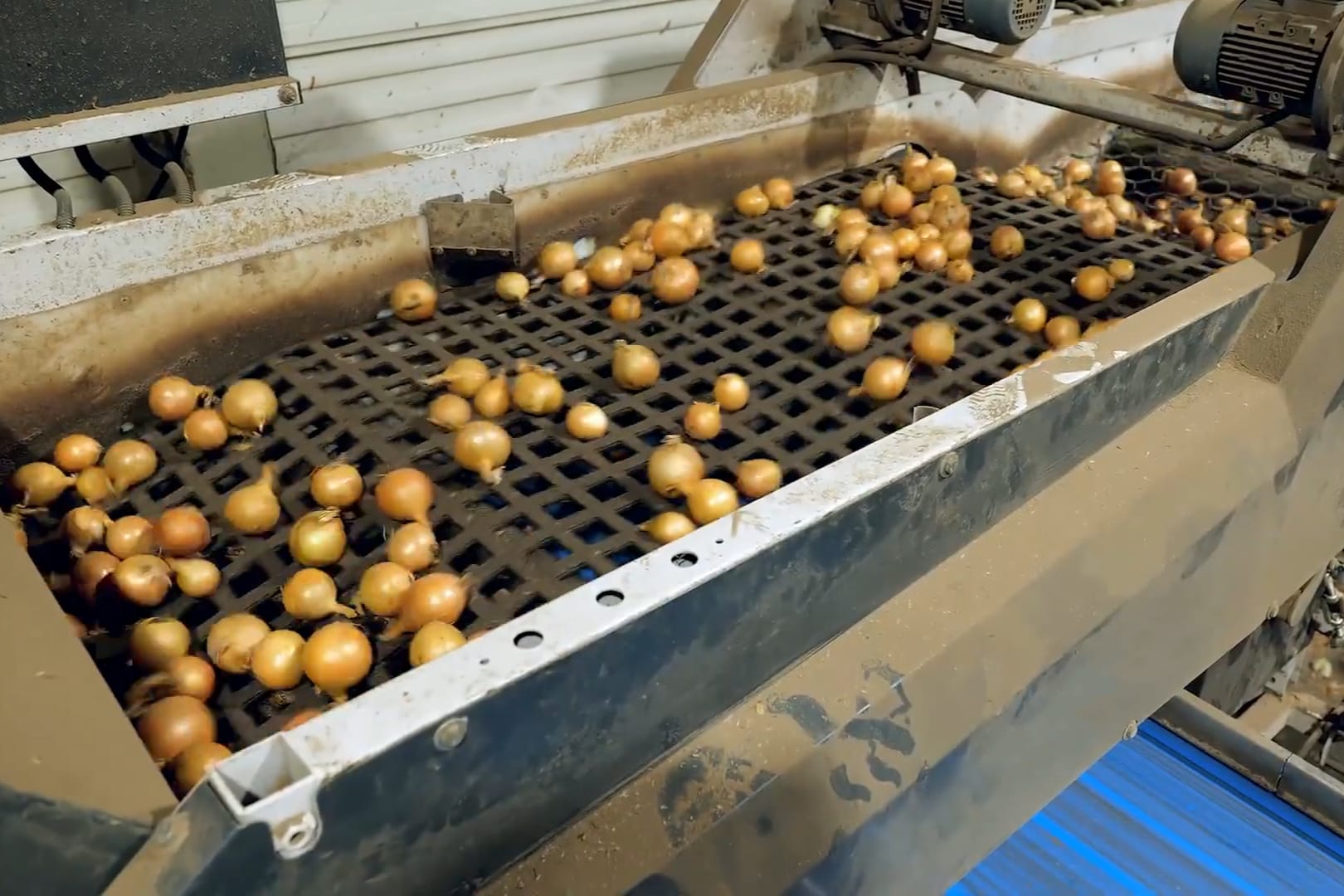
Web grading is the first and one of the most important steps in onion peeling. The onions are separated into different size categories using a vibrating grading system with interchangeable web screens. This ensures that only onions of uniform size continue together in the line. Consistent sizing is crucial because the following machines, such as peelers and top-and-tailers, are adjusted to handle specific size ranges (e.g., small, medium, or large onions). Without this step, the efficiency of peeling and trimming would drop significantly, leading to higher waste and lower yield.
Peeling
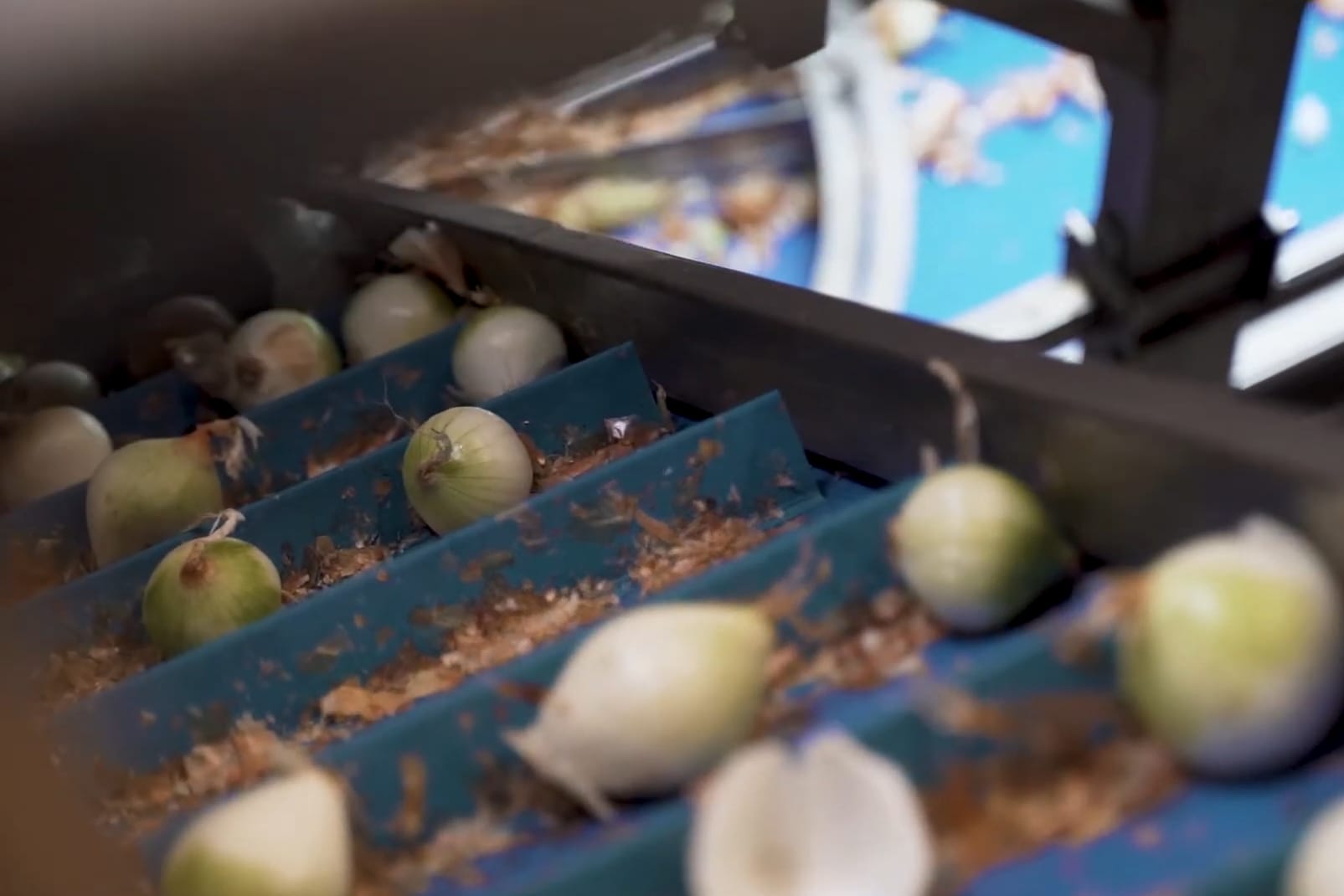
Once graded, onions enter the peeling stage. Modern onion peeling machines use high-pressure air, rollers, or mechanical knives to gently remove the dry outer skin layers. The machine can be calibrated to match the onion size category determined during grading, allowing for optimal peeling results with minimal waste. Proper peeling is essential not only for appearance but also for food safety and hygiene, as the outer layers may carry dirt or contaminants. By automating this stage, processors reduce labor while achieving a consistent and clean finish.
Top and Tailing
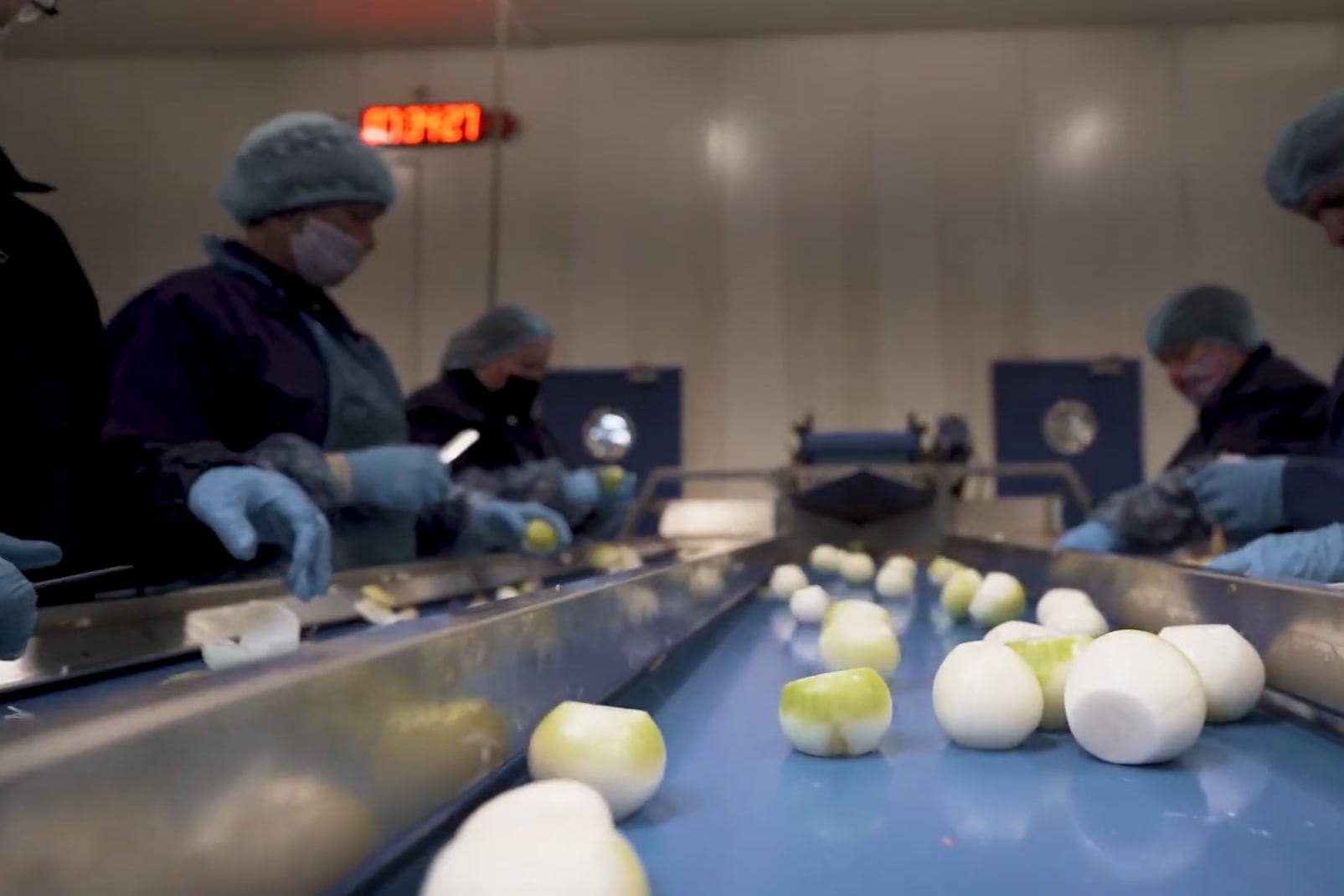
After peeling, the onions undergo top and tail removal, where the root end and the stem end are precisely trimmed. This step gives the onions a uniform shape and prepares them for downstream processing such as slicing, dicing, or packaging whole. These operations can be performed either manually or fully automatically using specialized machinery, ensuring consistent results and high efficiency. Precision trimming also minimizes unnecessary product loss, which is especially important when working with high-volume production.
Manual Inspection
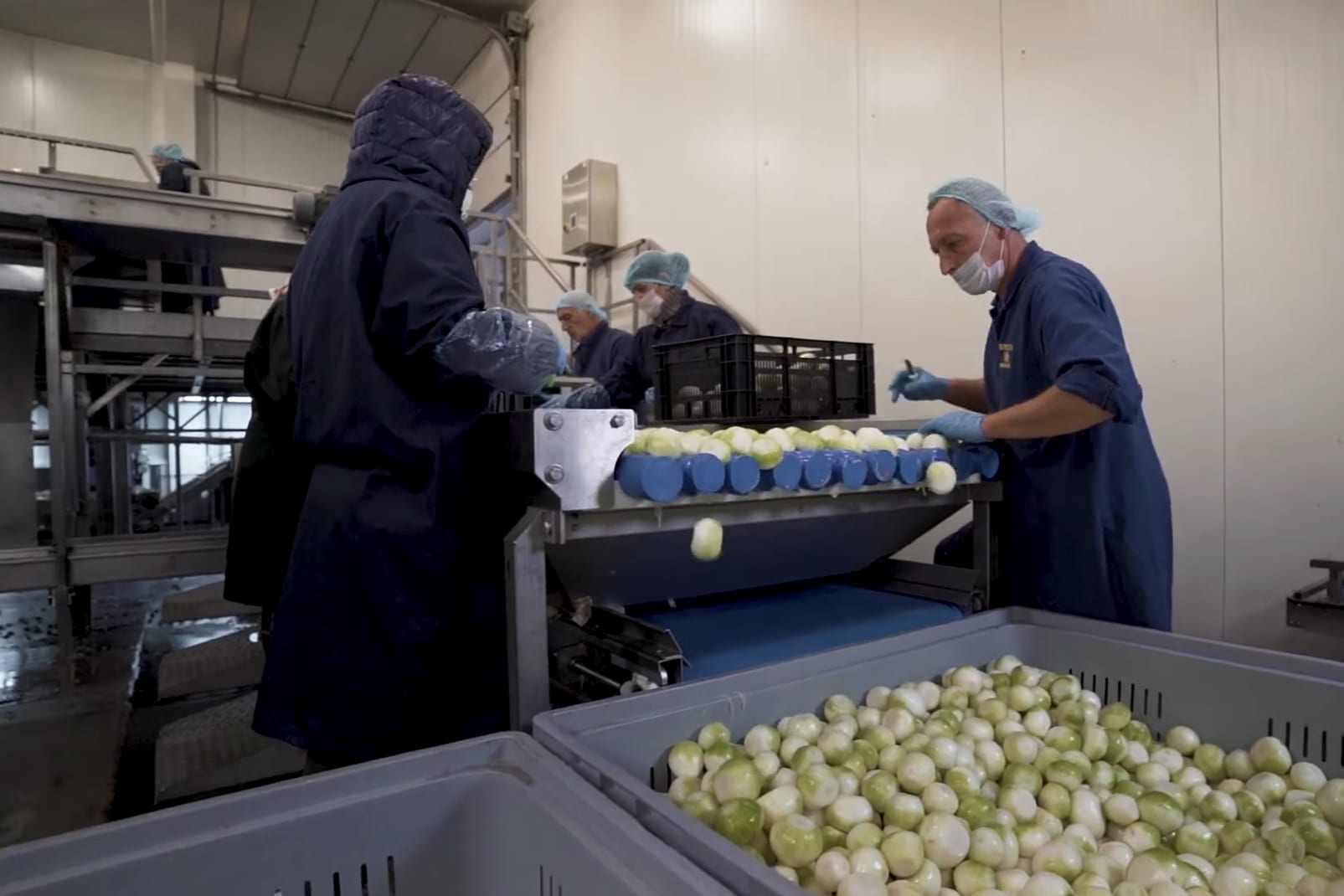
Despite the efficiency of automated systems, human inspection remains a critical quality control measure. Trained operators visually check onions for any remaining defects, blemishes, or incomplete peeling. Manual inspection allows processors to catch irregularities that machines may occasionally miss, ensuring that only high-quality onions reach the consumer. This stage is especially important for fresh-market onions, where visual appearance directly affects consumer preference.
Optical Sorting
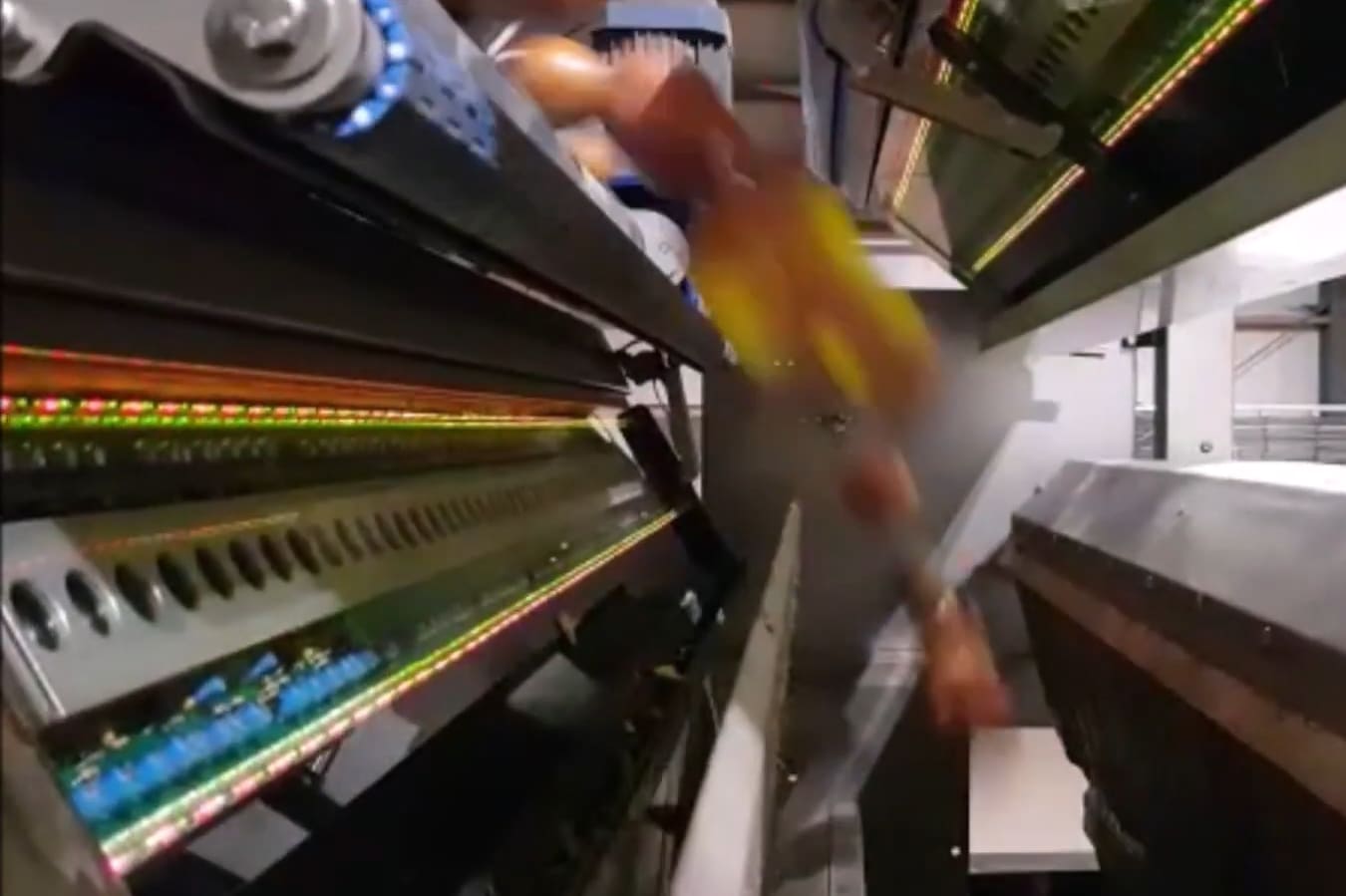
As an alternative to manual inspection, optical sorting technology offers a faster and more accurate solution. Equipped with high-resolution cameras and advanced sensors, these machines can detect imperfections such as discoloration, damage, or incomplete peeling. Optical sorters automatically remove defective onions from the line, guaranteeing consistent quality while significantly reducing labor requirements. This technology is particularly valuable in large-scale operations where speed and accuracy are critical.
Weighing and Packing
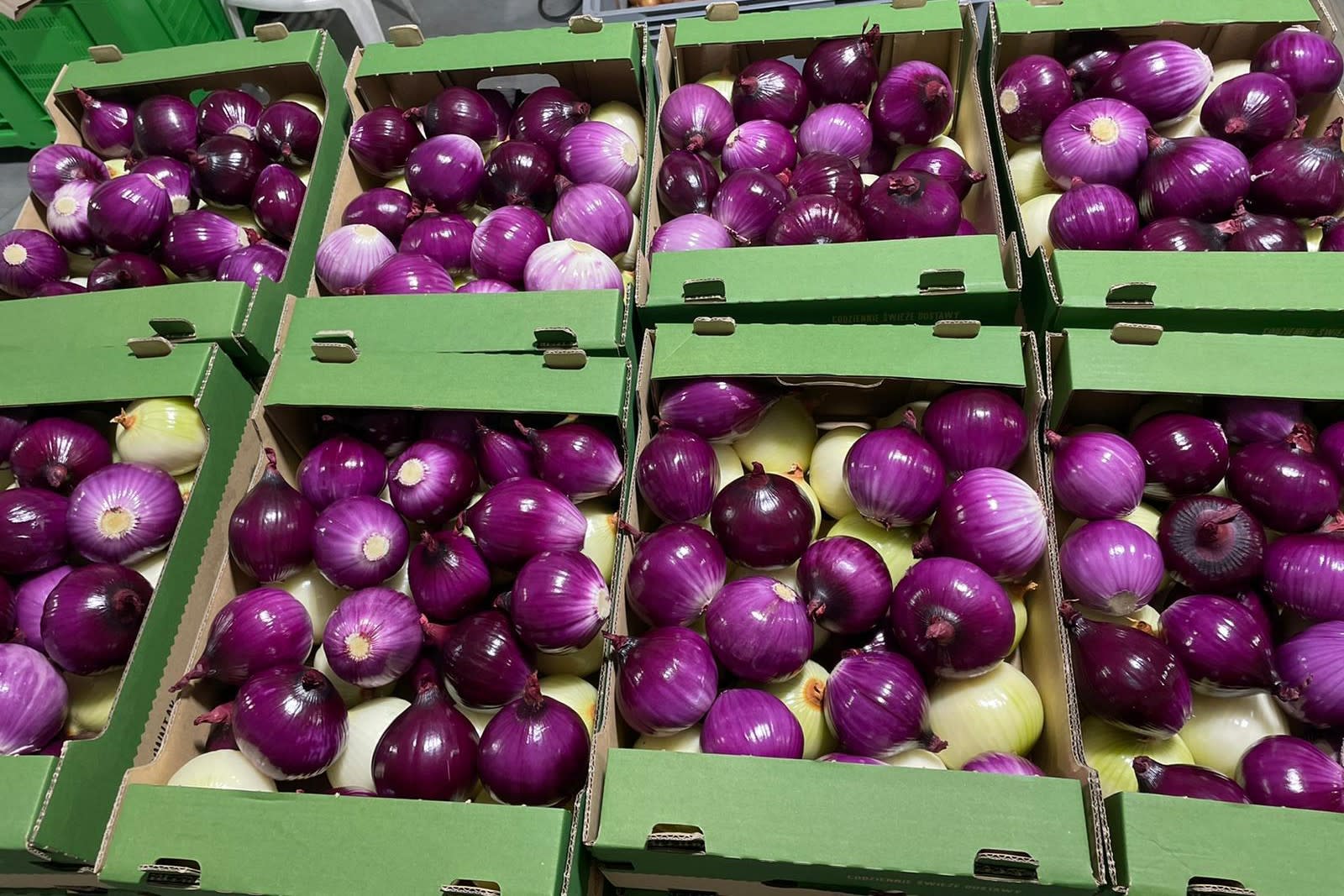
The final step is weighing and packaging. Onions are portioned into fixed weights using precise weighing systems, ensuring compliance with retail and wholesale requirements. They can then be packed into consumer bags, bulk boxes, or net packaging depending on the end market. Automated weighing and bagging lines minimize product giveaway and increase efficiency, while also providing attractive, uniform packs that are ready for distribution.
Palletizing

Once onions are packed, the filled bags, cartons, or crates are stacked onto pallets for easier handling, storage, and transportation. Automated palletizing systems arrange the packages in stable layers, maximizing load efficiency and reducing manual labor. This step ensures that onions are safely prepared for logistics, whether for local delivery or export, while improving warehouse organization and supply chain efficiency.
FAQ
What capacity does the onion peeling machine handle?
The OP-120 processes between 700 and 2000 kg/h, with adjustable working speed so it can be tuned to your production line.
How much waste does the onion peeler save compared to other machines?
It produces 15-20% less waste than conventional magnetic peelers, thanks to a multi-directional air jet system that peels more precisely than single-point magnetic impact.
Is the onion peeling machine EU compliant and hygienic to operate?
Yes. The machine is EU compliant and built with a powder-coated, mobile, wheeled frame designed for easy cleaning and hygienic operation in food processing environments.
Can the onion peeling line be customized to my facility?
Yes. Quadra Machinery offers turnkey onion peeling lines, from a standalone peeler through full lines with grading, top-and-tailing, optical sorting, weighing, and packing built around your capacity and layout needs.
How many operators does the onion peeling machine require?
The OP-120 is designed to run with a single operator, reducing labor requirements compared to manual peeling. However, the number of personnel required for the complete onion peeling line depends on the design and level of automation involved.
How do I get pricing for an onion peeling machine?
Pricing depends on capacity and line configuration. Submit your production volume and requirements through the contact form on this page to receive a custom quote.